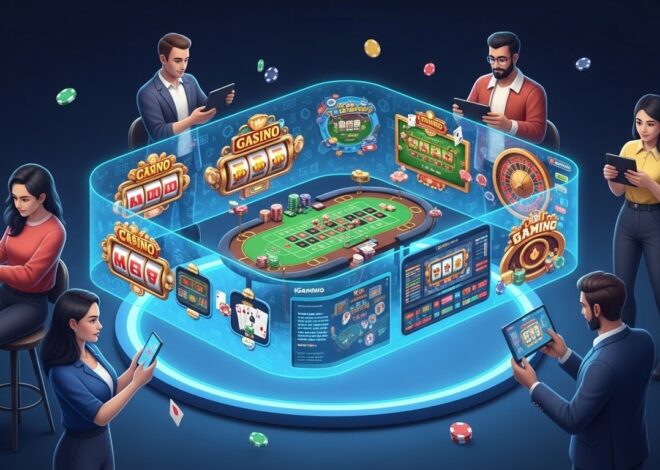
The Infinite Playground: How Games Shape Imagination, Innovation, and the Human Experience
The Meaning and Essence of Games
Games have always been a fundamental part of human life. They are not merely forms of entertainment; they are reflections of our creativity, competition, and curiosity. From ancient board games to the most advanced digital simulations, games have evolved alongside humanity, mirroring the ways we learn, interact, and grow. At their core, games are about challenge, strategy, imagination, and connection. They provide an outlet for exploration, problem-solving, and emotional expression, offering people of all ages a shared language of play and discovery.
Whether played on a field, a table, or a screen, games embody the spirit of innovation. They encourage individuals to test their limits, take risks, and collaborate toward common goals. This universal appeal makes gaming one of the most dynamic and enduring elements of human culture.
The Ancient Origins of Games
Long before the digital age, ancient civilizations created games as a means of recreation, skill-building, and storytelling. Archaeologists have found evidence of gaming boards, dice, and tokens dating back thousands of years. The Egyptians played Senet, the Chinese mastered Go, and the Greeks developed athletic competitions that inspired modern sports. These games were not just pastimes; they were woven into rituals, social gatherings, and education.
Games served multiple functions. They trained minds to think strategically, bodies to perform skillfully, and communities to interact meaningfully. Many traditional games were reflections of the societies that created them. For example, chess represented the hierarchical structures of medieval kingdoms, while card games introduced chance and unpredictability into the realm of strategy. The essence of gaming has always been to balance structure and spontaneity, rules and creativity—a duality that continues in modern gaming.
The Digital Revolution and the Birth of Video Games
The 20th century introduced a technological revolution that would change gaming forever. With the invention of computers and digital interfaces, games evolved from physical objects into interactive experiences. The earliest video games, such as Pong and Space Invaders, captivated audiences with simple mechanics but endless replayability. They introduced a new way for humans to engage with machines and each other.
The 1980s and 1990s marked the golden age of gaming, with the rise of home consoles like the Nintendo Entertainment System and the Sega Genesis. Iconic characters such as Mario, Sonic, and Link became cultural symbols, transcending the screen to become household names. These games combined storytelling, art, music, and interactivity, creating immersive experiences that no other medium could replicate.
PC gaming also flourished, offering players complex simulations and role-playing experiences. Titles like Doom, SimCity, and Warcraft pushed the boundaries of technology and imagination. As the internet expanded, games began connecting players across continents, laying the groundwork for the online multiplayer experiences that dominate today’s gaming world.
The Art and Science of Game Design
Game design is both a creative art and a technical science. Every game begins as an idea—a story to tell, a challenge to overcome, or a world to explore. Developers must balance gameplay mechanics, narrative depth, and visual design to create engaging and memorable experiences.
At the heart of game design lies the concept of interactivity. Unlike passive forms of entertainment, games invite players to make choices that shape their outcomes. This agency gives gaming its emotional and intellectual power. Players are not merely observers; they are participants in the unfolding of a virtual reality.
Game designers use psychology, mathematics, storytelling, and art to create worlds that feel alive. The process requires deep understanding of human motivation—reward systems, curiosity, competition, and cooperation all drive engagement. Well-designed games can evoke emotions ranging from joy to fear, triumph to despair, proving that gaming is one of the most expressive art forms of the modern age.
The Expansion of Genres and Styles
As technology advanced, games diversified into countless genres, catering to every interest and imagination. Action and adventure games test reflexes and courage, strategy games challenge logic and foresight, while role-playing games invite players to inhabit characters and explore vast narratives. Simulation and sandbox games allow creativity to flourish, giving players the tools to build worlds, cities, and even entire civilizations.
Casual games, puzzle games, and mobile games have brought gaming to new audiences, making it accessible to people of all ages and lifestyles. Indie developers have contributed to this diversity by experimenting with unconventional stories, mechanics, and artistic styles. This explosion of creativity has made gaming one of the most varied and inclusive entertainment mediums in history.
The Psychology and Benefits of Playing Games
Games are more than fun—they engage the human mind in ways few other activities can. They stimulate problem-solving, memory, coordination, and strategic thinking. Through repetition and reward, games enhance learning and skill development. In multiplayer settings, they teach communication, teamwork, and empathy.
From a psychological perspective, games provide a sense of achievement and control. Players can experiment, fail, and try again without real-world consequences. This freedom fosters resilience, adaptability, and creativity. Games also offer emotional escape, helping players relax and unwind after stressful days.
In educational contexts, gaming has proven to be a powerful teaching tool. Educational games use interactivity to explain complex concepts in mathematics, science, and history, making learning more engaging and effective. Even in professional environments, gamification—the application of game principles to work and learning—boosts motivation and performance.
The Rise of Multiplayer and Online Worlds
Online gaming transformed the way people interact with games and each other. With the advent of high-speed internet, multiplayer games became massive social experiences. Players could now team up, compete, and communicate in real time, creating virtual communities that transcended physical boundaries.
Massively multiplayer online role-playing games (MMORPGs) like World of Warcraft and Final Fantasy XIV allowed millions of players to explore shared worlds, undertake quests, and form friendships. Competitive games such as Counter-Strike, League of Legends, and Fortnite built thriving ecosystems of professional players, spectators, and sponsors, giving birth to the eSports phenomenon.
Online gaming redefined community and identity. Players collaborate across continents, forming bonds based on shared passion and mutual respect. Gaming is no longer a solitary activity—it is a global network of human connection.
Games as a Cultural and Artistic Medium
Modern games are cultural artifacts that reflect society’s values, fears, and aspirations. They are as much works of art as they are entertainment. Visual design, storytelling, music, and interactivity combine to create experiences that evoke deep emotion and provoke thought.
Games explore themes like morality, identity, and survival, inviting players to engage with philosophical and ethical questions. Titles such as The Last of Us, Journey, and Red Dead Redemption blend cinematic storytelling with interactive decision-making, proving that games can rival literature and film in emotional depth and artistic merit.
The artistry of gaming extends beyond the screen. Game soundtracks, concept art, and fan creations have inspired countless artists, writers, and musicians. Gaming conventions, cosplay, and online communities demonstrate how deeply games influence popular culture and creativity worldwide.
The Business and Economics of Games
The gaming industry has become one of the largest entertainment sectors in the world, surpassing even film and music in annual revenue. Developers, publishers, and hardware manufacturers form a global network of innovation and commerce. Games generate income through sales, subscriptions, in-game purchases, and advertising, while eSports, streaming, and content creation offer new opportunities for careers and entrepreneurship.
Independent developers have also reshaped the industry, proving that creativity and innovation can rival corporate budgets. Platforms for digital distribution have democratized game publishing, allowing small teams to reach global audiences. This shift has empowered diverse voices and ideas, enriching the gaming landscape.
The Influence of Technology on Gaming
Advancements in technology continue to push gaming forward. High-definition graphics, virtual reality, artificial intelligence, and cloud computing have expanded what games can achieve. Photorealistic environments, adaptive sound design, and advanced physics simulations make virtual worlds feel alive and responsive.
Artificial intelligence enhances both gameplay and development, creating smarter opponents, dynamic storytelling, and personalized experiences. Cloud gaming eliminates hardware limitations, allowing players to stream complex games on any device. As technology evolves, gaming will continue to blur the lines between the real and the virtual, offering experiences once thought impossible.
The Future of Gaming
The future of gaming promises even greater immersion, inclusivity, and interactivity. Virtual reality and augmented reality will redefine how players engage with worlds, while artificial intelligence will personalize narratives and challenges. Cross-platform play will continue to unite players, while sustainable design and accessibility will make gaming more inclusive for people of all abilities and backgrounds.
The boundaries between gaming, education, and professional life will also continue to fade. Games will become tools for collaboration, creativity, and even mental health. Virtual spaces will host classrooms, workplaces, and communities, integrating gaming technology into every aspect of daily life.
As technology advances, ethical questions about artificial intelligence, data privacy, and player well-being will become increasingly important. The future of gaming will depend not only on innovation but also on responsibility and inclusivity.
Conclusion: The Power of Play
Games have come a long way from the ancient boards and dice of early civilizations. They have grown into a powerful medium that entertains, educates, connects, and inspires. Whether digital or physical, simple or complex, games reflect the human desire to explore, compete, and create.
In the modern world, games are more than a pastime—they are an integral part of culture and communication. They teach, heal, and inspire creativity. They connect people across borders and generations, reminding us that play is not just a child’s activity but a lifelong source of joy, learning, and discovery.
Gaming is the infinite playground of human imagination, a realm where art and science meet, and where the human spirit continues to evolve through the power of play.